Rhinoplasty, or nose replacement surgery, is increasingly popular among medical tourists in Iran. Known for its exceptional healthcare, Iran has become a sought-after destination for the operation. Pars Med Travel, a leading health tourism agency, plays an important role in bringing many tourists to Iran every year for rhinoplasty and other medical and cosmetic services Thanks to Pars Med Travel’s reputation for reliability and professionalism well therefore, it connects patients with experienced surgeons and existing -a-design you provide. The company’s broad support, commitment to ethical practices, and competitive pricing make it reliable for those seeking a transformative dental experience in Iran
| o Second time | 2200-2400 |
| o Third time | 2400-3000 |
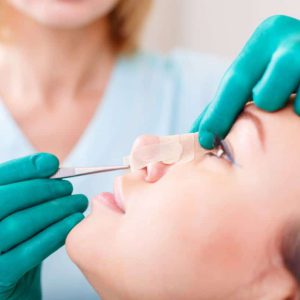
Revision Rhinoplasty is divided into the following two categories:
Choosing a good surgeon for reconstructive rhinoplasty is very important for primary rhinoplasty and has a significant impact on the outcome of the operation. Sometimes due to lack of skill or experience and sometimes due to non-observance of post-surgery care by the patient, problems may arise that force the patient to perform nose reconstruction surgery. The following are the most important problems that may arise as a result of improper practice:
if the doctor does not have enough expertise or experience, he may damage the structure of the nose and the patient’s breathing during the process of rhinoplasty. Breathing or loss of the sense of smell or the sound of breathing causes the patient. Excessive changes or abnormal appearance: The most important goal of performing nose job in Iran is to remove the defects and appearance problems of the nose. However, some doctors may perform unnatural and artificial surgery on a person’s nose due to lack of knowledge about the science of aesthetics. This form of nose is not suitable for every person’s face and most people get tired of their face after a few years. For this reason, excessive changes or abnormality of the nose are other reasons that cause people to perform nose reconstruction surgery.

In some situations, if the cartilages of the tip of the nose are not strengthened well, the nose may droop after some time and create an inappropriate appearance on the person’s face. For this reason, secondary nose surgery may be performed with the aim of solving this problem. Residual protrusion of the bridge of the nose: Usually, bony noses have a protrusion or protrusion on the nasal bone, which is called a nasal hump. After the initial surgery, this hump may not be removed, which gives an unattractive appearance to the nose. Therefore, it is necessary to solve this problem by doing reconstructive nose surgery.
One of the common problems is the asymmetry of the nostrils after surgery. It is necessary to keep in mind that completely equalizing the nostrils is not possible, but it is necessary for the rhinoplasty doctor, with his skill and precision, to make the nostrils the same and similar to each other as much as possible. If the asymmetry of the nostrils is large, you can improve it by performing nose reconstruction surgery.
The goal of most people to perform nose surgery is to make the nose smaller. Sometimes, due to the lack of skill of the surgeon, the nose may not shrink enough, which causes the patient to be dissatisfied after the surgery, and this problem can be solved by performing secondary rhinoplasty.
This problem occurs mostly in bony noses and often causes the nose to be seen in an unusual shape and causes problems in terms of breathing and beauty for the patient. This problem can be solved to a great extent with nose reconstructive surgery and cartilage strengthening.
One of the biggest problems that may arise as a result of improper rhinoplasty is the occurrence of drooping or protrusions on the nose that caused by external or internal scars and give an inappropriate appearance to the nose.
While nasal surgery can solve the deviation of the nose and related problems. Sometimes, the nose may deviate after the surgery due to the doctor’s lack of skill. In some situations, this problem occurs due to damage to the nose after the operation, and the only way to solve this problem and correct the nasal septum blade is to perform the nose operation again.
If the doctor does not have enough control and is not familiar with the science of aesthetics, due to the lack of proportion, he creates a large distance between the nostrils, which gives an ugly appearance to the nose.
Another important reason for people to perform nose repair surgery is the depressions of the cartilages next to the nose, which cause problems in breathing.

In order to perform nose surgery, you should first of all be careful in choosing a good nose surgery doctor; Especially if your reason for performing secondary nose surgery was the surgeon’s error.
After this stage, he should be examined by the attending physician, during which he will find out the existing problems and their causes. Then the amount and type of changes that can be implemented on the nose will be told to the patient by the surgeon.
As with the initial rhinoplasty procedure, the surgeon reviews the individual’s medical history. During this meeting, the doctor emphasizes the following points:
The purpose of redoing the rhinoplasty operation is to correct and improve the appearance and respiratory function of the nose. The best otolaryngologist, during this process, tries to strengthen and restore the nose by performing cartilage grafting from other areas such as behind the ear or the rib of the patient.
Nose reconstruction can do in two ways, open or closed. But due to the complications of this operation and cartilage grafting, most surgeons prefer to perform nose reconstruction surgery with an open method. Because this surgery gives the doctor a wider view and makes more changes possible due to easy access to the nasal structure.
Reconstructive rhinoplasty is an invasive operation and therefore must perform under general anesthesia. General anesthesia allows the surgeon to focus more on the surgery.
Reconstructive nose surgery is performed under general anesthesia and often takes longer than the initial nose job. Of course, this depends largely on the problems of the nose, but on average, due to the complications that exist in the secondary nose surgery, this operation may take between 3 and 4 hours, while the primary nose surgery usually takes between one hour. And it takes half to 2 hours.
As mentioned, reconstructive nose surgery very complicated and difficult, especially if you have done this surgery before with another doctor. Because each doctor has a special technique and method for surgery, and because of this, nose repair will be difficult.
On the other hand, the tissues of the nose have manipulate once, and for this reason, changing these tissues again is more sensitive and needs done more carefully. The sensitivity of the reconstructive procedure is such that it recommended that the patient focus on choosing the best nose reconstructive surgeon before anything else. If this surgery do not perform by a specialist and experienced doctor and a successful result do not achieve, in addition to the loss of time and money, your health needs to put at risk for the third time.
If you are confident in the mastery, skill and knowledge of your rhinoplasty doctor and you know that the problems that have arisen are due to improper care after nose surgery, it is better to perform this surgery with your doctor. But in situations where the problems caused in the nose caused by the lack of skill and expertise of the doctor, it is necessary to refer to a doctor with high skill and experience in this field to perform nose repair surgery.
When you undergo nose surgery for the first time, no damage has do to the structure of the nose, so the surgery done easily and without worry. But the incisions made during the surgery will create scars and lead to the creation of new tissues. For this reason, in secondary nose surgery, it is necessary to create incisions in such a way that the soft tissue of the nose do not damage or the nasal tissue do not seriously damage by creating new wounds.

Due to the fact that the nose has undergone surgery once and its internal structure has undergone changes, parts of the natural tissues of the nose may have remove. This change created in the anatomy of the nose limits the good rhinoplasty doctor in performing the reconstructive rhinoplasty process. Therefore, the reconstructive nose surgeon must have high expertise and experience to be able to carry out the most correct corrections despite the limitations
Another difference in reconstructive surgery is the higher probability of using cartilage tissue graft.
According to the point that we explained earlier, that is, the removal of some parts of natural tissues, the probability of implementing the graft technique increases.
Patients who are looking for rhinoplasty or revision surgery face a big challenge, which is to find the best rhinoplasty doctor. During this search, they may come across banners such as reconstructive nose surgery without anesthesia or outpatient nose reconstructive surgery.
Here, the question arises in the minds of these people, is it possible to have a reconstructive nose surgery without anesthesia? This is an issue that only the reconstructive nose surgeon will determine if it is possible or not after conducting the necessary investigations on the nose that needs repaired. Although in some cases it is possible to perform the nose repair operation without anesthesia, but considering that maintaining the safety and health of the patient is the first word in a treatment process, the nose repair doctor often prefers to perform the procedure under anesthesia.
Reconstructive nose surgery, like any other surgical procedure, can cause swelling of the nose and facial tissues, which takes time to subside. Following the instructions below will help speed up the swelling and allow you to see the beautiful result created in your nose sooner:
Reconstructive rhinoplasty, like any other surgical procedure, can cause unpredictable changes in the treated tissue. Choosing a skilled and experienced nose doctor as well as understanding and having reasonable expectations of the treatment outcome can help create a successful and complication-free outcome. Possible side effects of reconstructive nose surgery include the following:
The reason why revision surgery more expensive compared to primary rhinoplasty the amount of work required in the secondary surgery process. Usually, the conditions of nasal preparation for secondary rhinoplasty are more difficult due to the need to dissect from the path of scar tissue.
In addition, it is usually necessary to remove cartilage tissue from other parts of the body such as the septum, ear or rib in the revision procedure and transplant it to the cartilage framework of the nose in such a way as to create a pleasant appearance in this organ. Primary nose surgery usually takes two to three hours, but reconstructive nose surgery takes four to six hours, depending on the complexity of the tissue repaired.
To ensure that your nose has enough time to heal after the initial operation, it is necessary to wait for at least 6 to 9 months.
Although it is a little difficult to bear the adverse results left from the primary nose surgery for this period of six to nine months, on the other hand, it is also necessary to pass the full recovery period. On the other hand, during this period of several months, with the progress of the healing process, the shape and function of the nose may reach an acceptable level for the patient, and as a result, it will not be necessary to perform nose reconstruction surgery.

Empty nose syndrome occurs when a major part of the nasal mucous membrane cover has remove during primary rhinoplasty, resulting in dryness, scaly, and non-functioning of the inner lining of the nasal cavity.
Although the nostrils appear open and there is no obstacle in the way of air flow, but patients who have this problem feel that no air is flowing in their nose due to the destruction of the inner membrane.
This problem is the result of excessive removal of the middle and lower turbinates of the nose. Symptomatic treatment using nasal saline sprays and local treatments using drugs is one of the temporary solutions and nose repair surgery is a permanent solution to this problem.
Many patients worried and anxious after hearing the news that a cartilage graft needed in their reconstructive nose surgery. Some of them also worried about the fact that the cartilage will see in the nose after transplant and ruin the beauty of their nose.
Others think that this surgical process is very invasive and this causes anxiety in them. Of course, most candidates for primary rhinoplasty or reconstructive nose surgery know that cartilage grafting is part of the operation process to strengthen the nasal framework, improve its function, and restore the desired contour in this focal organ of the face.
Cartilage often taken from an area called the septum in the nose, but if the amount of cartilage in this area of the nose is not sufficient for the surgery, the best rhinoplasty surgeon will take it from other areas such as the ear or rib. The use of cartilage depends mainly on the problems that solved during rhinoplasty. Cartilage grafting used more often in reconstructive nose surgery due to the weakening of the nasal framework in the initial surgery. This technique allows the doctor to successfully enhance the nasal framework to create the result you have dreamed of.
Reconstructive nose surgery a micro process in which, using a closed method, contouring create in the bridge of the nose, and minor problems in the nose that left over from the previous surgery or caused in the nose for any other reason, and to correct it, Opening the nose with an open technique not required, it used.
In this process, the filing technique use to trim the unevenness on the bridge of the nose. Standard hand files or files with a small motor use to achieve this goal, and by using this tool and the maneuvering of the hands of a good nose surgeon, better and control changes in the appearance of the nose in the area of the bridge of the nose are provided.
In some cases, there are minor problems in the column and tip of the nose that can treat on an outpatient basis. Considering that these micro techniques are partial treatment processes in the nose, as a result, their recovery period is also short, and the patient can resume normal activities after receiving the treatment, after spending a short period of care and recovery.
Ultrasonic or piezoelectric nasal reconstructive surgery, known by the abbreviation PEI, is a method that works on hard bones and cartilages without manipulating the soft tissues, skin or nasal mucosa, and applies the necessary corrections in these two areas. does
The fracture lines that created during this process are more precise and the amount of tissue damage around the treated area is less, and as a result, the patient experiences less bleeding, bruising, swelling and pain during and after the surgery.
Every month, Pars Med Travel selects 5 couples to receive completely free IVF treatment in Iran, supported by charities.
Reviews
There are no reviews yet.